
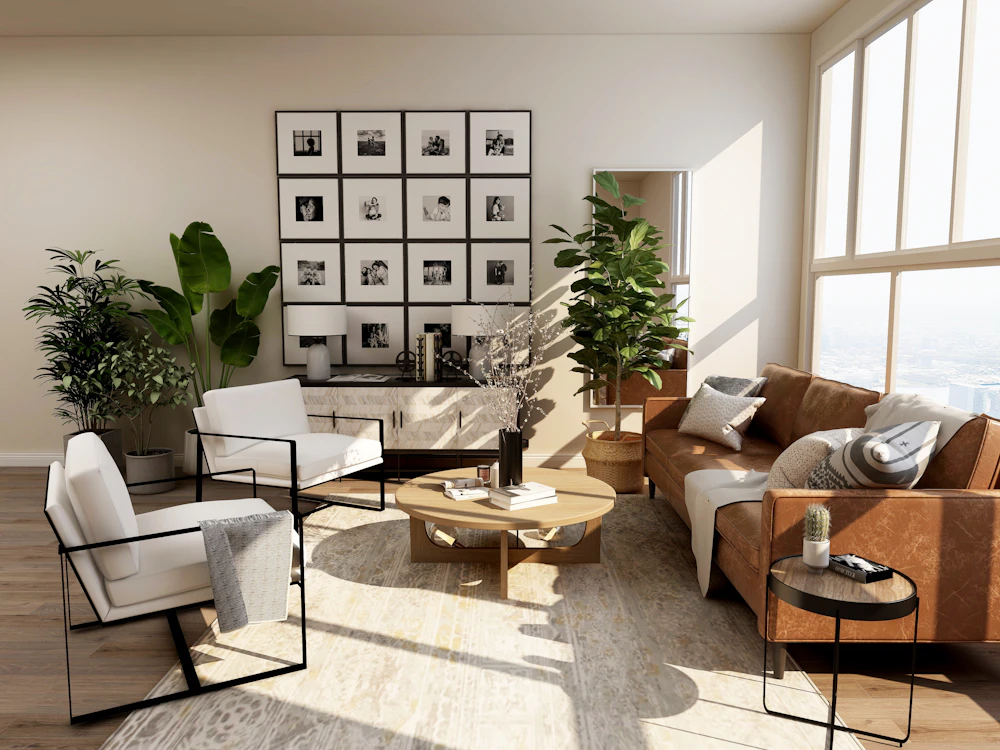
The future of living is rarely announced by a single dramatic invention. It arrives through small changes in how rooms are used, how households share space, and how people decide what deserves attention at home. The overlooked spaces between rooms—and how designers are making them matter again.
In Living Well in the In-Between, the question is not what the future should look like from a distance, but how the overlooked spaces between rooms—and how designers are making them matter again. can become part of ordinary life. That distinction matters: the most useful ideas are the ones people can understand, live with, maintain, and eventually make their own.
A home built around real life
Good residential design begins with observation. Morning routines, evening quiet, guests arriving unexpectedly, work moving between rooms, and the need to store everyday objects all create a pattern. The most convincing future-facing homes respond to that pattern instead of imposing a fixed lifestyle.
When considered through the lens of living well in the in-between, this becomes a question of priorities rather than decoration.
For Neura, the interesting part is how this connects with the rhythm of daily life, changing households, and the need for spaces to support more than one routine. A successful approach does not ask people to become different people overnight. Instead, it makes a better choice easier to notice, easier to use, and easier to keep. This is especially important when a project is intended to last for years rather than perform for a single photograph.
In practice, that means paying attention to the details around the headline idea: where materials meet, how circulation works, what can be repaired, how a space changes between morning and evening, and whether the experience remains generous when conditions are less than perfect. These details are rarely the loudest part of a project, but they often determine whether an idea has lasting value.
Flexibility without visual noise
Adaptability does not have to mean a room filled with mechanisms. Sliding partitions, generous circulation, movable furniture, layered lighting, and carefully placed storage can give one space several identities while keeping the visual field calm.
The same principle becomes especially visible when we look at the overlooked spaces between rooms—and how designers are making them matter again..
For Neura, the interesting part is how this connects with the rhythm of daily life, changing households, and the need for spaces to support more than one routine. A successful approach does not ask people to become different people overnight. Instead, it makes a better choice easier to notice, easier to use, and easier to keep. This is especially important when a project is intended to last for years rather than perform for a single photograph.
In practice, that means paying attention to the details around the headline idea: where materials meet, how circulation works, what can be repaired, how a space changes between morning and evening, and whether the experience remains generous when conditions are less than perfect. These details are rarely the loudest part of a project, but they often determine whether an idea has lasting value.
Comfort becomes more precise
Contemporary comfort is increasingly about proportion, daylight, acoustics, texture, temperature, and the ability to retreat. Soft materials still matter, but comfort now includes the feeling that a space understands when to be social and when to become quiet.
For a future-focused reader, the important detail is how this idea behaves over time.
For Neura, the interesting part is how this connects with the rhythm of daily life, changing households, and the need for spaces to support more than one routine. A successful approach does not ask people to become different people overnight. Instead, it makes a better choice easier to notice, easier to use, and easier to keep. This is especially important when a project is intended to last for years rather than perform for a single photograph.
In practice, that means paying attention to the details around the headline idea: where materials meet, how circulation works, what can be repaired, how a space changes between morning and evening, and whether the experience remains generous when conditions are less than perfect. These details are rarely the loudest part of a project, but they often determine whether an idea has lasting value.
The overlooked value of transition spaces
Thresholds, landings, window seats, entrance zones, balconies, and small corners often receive less attention than kitchens or living rooms. Yet these in-between spaces shape how a home feels from one moment to the next.
That long view is where the subject becomes more than a visual trend.
For Neura, the interesting part is how this connects with the rhythm of daily life, changing households, and the need for spaces to support more than one routine. A successful approach does not ask people to become different people overnight. Instead, it makes a better choice easier to notice, easier to use, and easier to keep. This is especially important when a project is intended to last for years rather than perform for a single photograph.
In practice, that means paying attention to the details around the headline idea: where materials meet, how circulation works, what can be repaired, how a space changes between morning and evening, and whether the experience remains generous when conditions are less than perfect. These details are rarely the loudest part of a project, but they often determine whether an idea has lasting value.
A longer view
The most future-ready home is not necessarily the most futuristic-looking one. It is the home that can absorb a new routine, a new generation, a change in furniture, or a different use without becoming obsolete.
The result is a design language that feels contemporary without depending on novelty.
For Neura, the interesting part is how this connects with the rhythm of daily life, changing households, and the need for spaces to support more than one routine. A successful approach does not ask people to become different people overnight. Instead, it makes a better choice easier to notice, easier to use, and easier to keep. This is especially important when a project is intended to last for years rather than perform for a single photograph.
In practice, that means paying attention to the details around the headline idea: where materials meet, how circulation works, what can be repaired, how a space changes between morning and evening, and whether the experience remains generous when conditions are less than perfect. These details are rarely the loudest part of a project, but they often determine whether an idea has lasting value.
What to look for
Readers can use living well in the in-between as a practical lens when evaluating a new space, object, building, or neighborhood. Look for decisions that make the experience clearer, more adaptable, more durable, or more generous. Ask what happens after the first impression: Can the idea be maintained? Can it accommodate change? Does it improve a real ritual? And does its visual language come from a meaningful decision or simply from fashion?
Signals of a thoughtful approach
- Adaptability: the idea can respond to changing needs without becoming complicated.
- Longevity: materials, forms, and decisions are intended to remain useful beyond a short trend cycle.
- Human scale: the experience works for real routines, different bodies, and different rhythms of life.
- Clarity: the design communicates its purpose without unnecessary visual noise.
- Care: maintenance, repair, reuse, and future change are treated as part of the original idea.
“The future feels most convincing when it makes everyday life more considered, not more complicated.”
— Elena Marlowe, Neura
The Neura perspective: Living Well in the In-Between is ultimately about making room for better choices. The future does not arrive as one finished style. It is built gradually through the spaces we inhabit, the things we keep, the materials we choose, and the ways we decide to share the world around us.
Conversation
Join the discussion and share your thoughts with the collective.